
Sign In

Multi-team Collaboration Protocol for AI Development
Achieve project success with the Multi-team Collaboration Protocol for AI Development today!
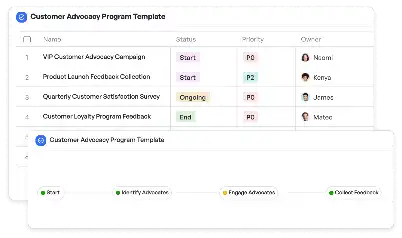
What is Multi-team Collaboration Protocol for AI Development?
The Multi-team Collaboration Protocol for AI Development is a structured framework designed to streamline the collaborative efforts of multiple teams working on AI projects. In the rapidly evolving field of artificial intelligence, projects often require the expertise of diverse teams, including data scientists, software engineers, domain experts, and project managers. This protocol ensures that all teams are aligned, resources are optimally allocated, and communication is seamless. By addressing the unique challenges of AI development, such as data integration, model training, and deployment, this protocol becomes indispensable for organizations aiming to stay competitive in the AI landscape. For instance, in a scenario where a company is developing an AI model for predictive analytics, this protocol would guide the teams through each phase, from data collection to deployment, ensuring efficiency and accuracy.
Try this template now
Who is this Multi-team Collaboration Protocol for AI Development Template for?
This template is tailored for organizations and teams involved in AI development projects. It is particularly beneficial for project managers, data scientists, software engineers, and domain experts who need to collaborate across departments. For example, a healthcare company developing an AI diagnostic tool would find this template invaluable for coordinating efforts between their medical experts, data analysts, and software developers. Similarly, tech startups working on innovative AI solutions can use this protocol to ensure that their limited resources are utilized effectively while maintaining high standards of quality and innovation.
Try this template now
Why use this Multi-team Collaboration Protocol for AI Development?
AI development projects often face unique challenges, such as integrating diverse datasets, managing cross-functional teams, and ensuring the scalability of AI models. This template addresses these pain points by providing a clear framework for collaboration. For instance, it helps in defining roles and responsibilities, ensuring that data scientists focus on model training while software engineers handle deployment. It also includes guidelines for effective communication, reducing the risk of misunderstandings and delays. By using this protocol, organizations can overcome the complexities of AI development, such as ensuring data security and compliance, and achieve their project goals more efficiently.
Try this template now
Get Started with the Multi-team Collaboration Protocol for AI Development
Follow these simple steps to get started with Meegle templates:
1. Click 'Get this Free Template Now' to sign up for Meegle.
2. After signing up, you will be redirected to the Multi-team Collaboration Protocol for AI Development. Click 'Use this Template' to create a version of this template in your workspace.
3. Customize the workflow and fields of the template to suit your specific needs.
4. Start using the template and experience the full potential of Meegle!
Try this template now
Free forever for teams up to 20!
The world’s #1 visualized project management tool
Powered by the next gen visual workflow engine

AI Requirements Development Process
Multi-vendor Integration Testing Template
Start instantly with our Multi-vendor Integration Testing Template —ready to use out of the box and always free. Ideal for boosting team productivity!
2025/11/5
2025/11/5
AI Requirements Development Process
Natural Language Processing Requirement Specification Template
Start instantly with our Natural Language Processing Requirement Specification Template —ready to use out of the box and always free. Ideal for boosting team productivity!
2025/11/5
2025/11/5
AI Requirements Development Process
Neural Network Hyperparameter Tuning Log
Start instantly with our Neural Network Hyperparameter Tuning Log —ready to use out of the box and always free. Ideal for boosting team productivity!
2025/11/5
2025/11/5
AI Requirements Development Process
Predictive Analytics Requirement Gathering Template
Start instantly with our Predictive Analytics Requirement Gathering Template —ready to use out of the box and always free. Ideal for boosting team productivity!
2025/11/5
2025/11/5
AI Requirements Development Process
Reinforcement Learning Reward Function Template
Start instantly with our Reinforcement Learning Reward Function Template —ready to use out of the box and always free. Ideal for boosting team productivity!
2025/11/5
2025/11/5
AI Requirements Development Process
Transfer Learning Implementation Guide
Start instantly with our Transfer Learning Implementation Guide —ready to use out of the box and always free. Ideal for boosting team productivity!
2025/11/5
2025/11/5
AI Requirements Development Process
AI Project Infrastructure Security Checklist
Start instantly with our AI Project Infrastructure Security Checklist —ready to use out of the box and always free. Ideal for boosting team productivity!
2025/11/5
2025/11/5
AI Requirements Development Process
AI Project Post-Deployment Review Template
Start instantly with our AI Project Post-Deployment Review Template —ready to use out of the box and always free. Ideal for boosting team productivity!
2025/11/5
2025/11/5


