
Sign In

Financial Software Leader Election Pattern
Achieve project success with the Financial Software Leader Election Pattern today!
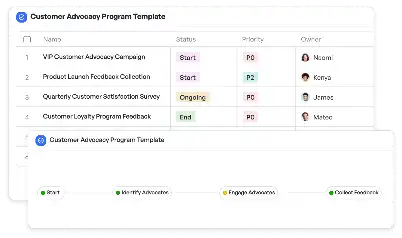
What is Financial Software Leader Election Pattern?
The Financial Software Leader Election Pattern is a critical design framework used in distributed financial systems to ensure seamless coordination and decision-making among multiple nodes. In the context of financial software, where real-time data processing, transaction integrity, and system reliability are paramount, this pattern plays a pivotal role. By electing a leader node, the system can manage tasks such as transaction validation, fraud detection, and data synchronization efficiently. For instance, in a distributed ledger system, the leader election ensures that one node takes charge of validating and committing transactions, thereby maintaining consistency across the network. This pattern is indispensable in scenarios where high availability and fault tolerance are non-negotiable, such as in stock trading platforms or payment gateways.
Try this template now
Who is this Financial Software Leader Election Pattern Template for?
This template is designed for software architects, system engineers, and developers working in the financial technology sector. Typical roles include distributed system designers, blockchain developers, and financial software engineers. It is particularly beneficial for teams managing high-stakes systems like real-time trading platforms, payment processing systems, and fraud detection mechanisms. For example, a blockchain developer can use this pattern to implement consensus mechanisms in a decentralized finance (DeFi) application, while a system architect might leverage it to design a fault-tolerant transaction processing system.
Try this template now
Why use this Financial Software Leader Election Pattern?
The Financial Software Leader Election Pattern addresses several critical challenges in distributed financial systems. One major pain point is ensuring consistency in transaction processing across multiple nodes. This pattern solves it by designating a leader node responsible for coordinating tasks. Another challenge is maintaining system availability during node failures. The leader election mechanism ensures that a new leader is promptly chosen, minimizing downtime. Additionally, in fraud detection systems, this pattern enables efficient coordination among nodes to analyze and flag suspicious activities. By using this template, teams can implement robust, scalable, and fault-tolerant systems tailored to the unique demands of the financial industry.
Try this template now
Get Started with the Financial Software Leader Election Pattern
Follow these simple steps to get started with Meegle templates:
1. Click 'Get this Free Template Now' to sign up for Meegle.
2. After signing up, you will be redirected to the Financial Software Leader Election Pattern. Click 'Use this Template' to create a version of this template in your workspace.
3. Customize the workflow and fields of the template to suit your specific needs.
4. Start using the template and experience the full potential of Meegle!
Try this template now
Free forever for teams up to 20!
The world’s #1 visualized project management tool
Powered by the next gen visual workflow engine

Financial Industry Software Development
Financial Software Leader-Follower Pattern
Start instantly with our Financial Software Leader-Follower Pattern —ready to use out of the box and always free. Ideal for boosting team productivity!
2025/12/12
2025/12/12
Financial Industry Software Development
Financial Software Legacy System Migration
Start instantly with our Financial Software Legacy System Migration —ready to use out of the box and always free. Ideal for boosting team productivity!
2025/12/12
2025/12/12
Financial Industry Software Development
Financial Software Load Balancing Strategy
Start instantly with our Financial Software Load Balancing Strategy —ready to use out of the box and always free. Ideal for boosting team productivity!
2025/12/12
2025/12/12
Financial Industry Software Development
Financial Software Load Shedding Strategy
Start instantly with our Financial Software Load Shedding Strategy —ready to use out of the box and always free. Ideal for boosting team productivity!
2025/12/12
2025/12/12
Financial Industry Software Development
Financial Software Load Testing Scenario
Start instantly with our Financial Software Load Testing Scenario —ready to use out of the box and always free. Ideal for boosting team productivity!
2025/12/12
2025/12/12
Financial Industry Software Development
Financial Software Log Retention Policy
Start instantly with our Financial Software Log Retention Policy —ready to use out of the box and always free. Ideal for boosting team productivity!
2025/12/12
2025/12/12
Financial Industry Software Development
Financial Software Message Deduplication
Start instantly with our Financial Software Message Deduplication —ready to use out of the box and always free. Ideal for boosting team productivity!
2025/12/12
2025/12/12
Financial Industry Software Development
Financial Software Message Queue Backlog
Start instantly with our Financial Software Message Queue Backlog —ready to use out of the box and always free. Ideal for boosting team productivity!
2025/12/12
2025/12/12


