
Sign In

Semiconductor Multi-Project Wafer Plan
Achieve project success with the Semiconductor Multi-Project Wafer Plan today!
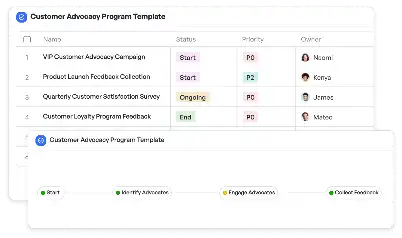
What is Semiconductor Multi-Project Wafer Plan?
The Semiconductor Multi-Project Wafer Plan (MPW) is a strategic framework designed to optimize the production of semiconductor wafers by consolidating multiple projects onto a single wafer. This approach is particularly significant in the semiconductor industry, where the cost of wafer fabrication is high, and efficient utilization of resources is critical. By sharing a wafer among multiple projects, companies can reduce costs, accelerate prototyping, and bring innovative products to market faster. For instance, in the development of advanced nodes like 5nm or 3nm, MPW plans allow multiple design teams to test their circuits simultaneously, ensuring faster iteration and validation. This methodology is indispensable for industries like automotive, IoT, and AI, where rapid innovation and cost efficiency are paramount.
Try this template now
Who is this Semiconductor Multi-Project Wafer Plan Template for?
The Semiconductor Multi-Project Wafer Plan Template is tailored for professionals and organizations involved in semiconductor design and manufacturing. Typical users include design engineers, project managers, and R&D teams working on cutting-edge technologies. For example, a design engineer working on an AI accelerator chip can use this template to coordinate with other teams sharing the same wafer. Similarly, project managers overseeing automotive chip development can leverage the template to streamline communication and resource allocation. This template is also ideal for startups and academic institutions that need to prototype their designs cost-effectively while collaborating with foundries and other stakeholders.
Try this template now
Why use this Semiconductor Multi-Project Wafer Plan?
The Semiconductor Multi-Project Wafer Plan addresses several pain points unique to the semiconductor industry. One major challenge is the high cost of wafer fabrication, which can be prohibitive for small-scale projects. By sharing a wafer among multiple projects, this template significantly reduces costs. Another issue is the complexity of coordinating multiple design teams working on the same wafer. The template provides a structured framework for managing dependencies, timelines, and resource allocation, ensuring seamless collaboration. Additionally, the template helps mitigate risks associated with design errors by incorporating robust testing and validation processes. For instance, in the context of IoT sensor development, the template ensures that all design teams can test their circuits under real-world conditions, reducing the likelihood of costly rework.
Try this template now
Get Started with the Semiconductor Multi-Project Wafer Plan
Follow these simple steps to get started with Meegle templates:
1. Click 'Get this Free Template Now' to sign up for Meegle.
2. After signing up, you will be redirected to the Semiconductor Multi-Project Wafer Plan. Click 'Use this Template' to create a version of this template in your workspace.
3. Customize the workflow and fields of the template to suit your specific needs.
4. Start using the template and experience the full potential of Meegle!
Try this template now
Free forever for teams up to 20!
The world’s #1 visualized project management tool
Powered by the next gen visual workflow engine

Semiconductor Product Development
Semiconductor Obsolescence Management Plan
Start instantly with our Semiconductor Obsolescence Management Plan —ready to use out of the box and always free. Ideal for boosting team productivity!
2025/10/16
2025/10/16
Semiconductor Product Development
Semiconductor PDK Validation Template
Start instantly with our Semiconductor PDK Validation Template —ready to use out of the box and always free. Ideal for boosting team productivity!
2025/10/16
2025/10/16
Semiconductor Product Development
Semiconductor Process Node Migration Plan
Start instantly with our Semiconductor Process Node Migration Plan —ready to use out of the box and always free. Ideal for boosting team productivity!
2025/10/16
2025/10/16
Semiconductor Product Development
Semiconductor Supply Chain Resiliency Map
Start instantly with our Semiconductor Supply Chain Resiliency Map —ready to use out of the box and always free. Ideal for boosting team productivity!
2025/10/16
2025/10/16
Semiconductor Product Development
Semiconductor Test Vector Management
Start instantly with our Semiconductor Test Vector Management —ready to use out of the box and always free. Ideal for boosting team productivity!
2025/10/16
2025/10/16
Semiconductor Product Development
Semiconductor Thermal Analysis Protocol
Start instantly with our Semiconductor Thermal Analysis Protocol —ready to use out of the box and always free. Ideal for boosting team productivity!
2025/10/16
2025/10/16
Semiconductor Product Development
Semiconductor Yield Management System
Start instantly with our Semiconductor Yield Management System —ready to use out of the box and always free. Ideal for boosting team productivity!
2025/10/16
2025/10/16
Semiconductor Product Development
Silicon Debug Procedure Template
Start instantly with our Silicon Debug Procedure Template —ready to use out of the box and always free. Ideal for boosting team productivity!
2025/10/16
2025/10/16


